SKUx Updates>Thought Leadership

SKUx and ProHealth Partner

ProHealth Connect and SKUx Partner to Deliver Innovative Item-Level Payment Solutions for CPG Promotions and Medicare Advantage OTC Benefits

MELVILLE, NY and ST. PETERSBURG, FL | MARCH X, 2026 — ProHealth Connect (“PHC”) and SKUx today announced a strategic partnership to enable item-level commerce orchestration at the retail checkout. This collaboration integrates PHC’s healthcare benefits and Over-the-Counter (OTC) program expertise with SKUx’s SKUPay®—a platform providing item-level offer precision, tender innovation, and support for emerging payment rails. By streamlining these complex capabilities into a single solution, merchants can now activate multiple funded-value services simultaneously. This allows health plans and brands to deliver value to consumers with greater precision and control at the point of sale (POS), significantly expanding access and usability across a broad retail network. Expanding Reach Through Technical Innovation Through this partnership, PHC is deploying SKUPay across its network of nearly 11,000 independent merchants to provide item-level accuracy for funded programs including-consumer CPG offers, humanitarian aid, and other eligibility-based programs. “ProHealth Connect is excited to equip our network with these next-generation capabilities,” said Andrew Winakor, President of ProHealth Connect. “By simplifying how multiple funded programs—from CPG promotions to OTC benefits— can be delivered through a single connection, we are achieving our vision for the future of item-level commerce at checkout while expanding the role independent retailers play in serving their communities”. Simultaneously, PHC will…


InComm Payments and SKUx Partner to Provide Innovative Digital Payment Solutions for Humanitarian Aid and Other Emerging Markets

ATLANTA and ST. PETERSBURG, Fla., Feb. 27, 2026 /PRNewswire/ — Today InComm Payments and SKUx (“SKUx”) jointly announced a strategic partnership to revolutionize digital payment distribution. By combining real-time, item-level controls with blockchain-backed transparency, the collaboration will streamline financial aid delivery, consumer packaged goods (CPG) and retail promotions, and empower next-gen emerging payment solutions. By leveraging each company’s unique patented capabilities, the partnership is poised to rapidly advance the opportunity for a diverse set of organizations to distribute real-time, branded digital payments with precision controls at the item level, ensuring donated or promoted funds are spent at the right time and for the right purpose. The offering will be jointly powered by InComm Payments’ market-leading retail network in partnership with SKUx’s blockchain payment distribution platform and emerging SKUPay® retail network and integrations into leading point-of-sale systems. “InComm Payments is excited to partner with SKUx to provide the ecosystem with the trusted financial tools and support they need to provide access to financial aid and recovery,” said Dave Etling, SVP and GM, InComm Payments. “InComm Payments’ commitment to continuous innovation to support our clients with cutting-edge technology solutions is perfectly aligned with SKUx’s platform approach. We look forward to success together.” “SKUx is honored to partner with…

Digital Wallets and the $16 Trillion Data Opportunity

Global digital wallet transaction values are projected to reach $16 trillion by 2028. In parts of Asia, adoption already exceeds 80%, and in India, UPI was processing more than 20 billion transactions per month by late 2025. As digital wallets evolve from simple payment tools into broader financial platforms, competition is intensifying. Yet the most valuable part of this shift is often overlooked. The real opportunity isn’t just moving money — it’s the transaction data created every time a payment occurs. Why Transaction Data Matters Digital wallets are quickly becoming the default way consumers pay. Every tap or scan generates insight: what was purchased, when and where it happened, which offer was used, and what else was bought. This information can shape better promotions, improve customer targeting, and drive smarter decisions. However, many businesses struggle to capture and use this data effectively. The Two Challenges Brands Face Delivering value into the wallet Traditional promotions create friction. Codes get lost, links expire, and offers go unused. Digital wallets require instant, seamless delivery, with rewards ready to redeem at checkout. Understanding what happens next Even when offers reach wallets, many brands lack visibility into redemption. Without knowing what was used, where, or…

Three Actions You Can Take This Quarter to Fix Your Engagement

Published by Trisha Asgeirsson – President, SKUx  You don’t need an 18-month roadmap to address the rejection of your loyalty program. You need three tactical moves you can execute this quarter.  Action 1: Run a parallel instant reward pilot  Don’t overhaul your entire program yet. Test instant rewards alongside your existing system.  Pick one customer segment or one product category. Deliver instant digital rewards – $5-10 virtual prepaid cards – to customers who complete specific actions.  Run this for 60-90 days. Track three metrics: redemption rate, repeat purchase rate, and basket size versus control group. Our data shows 98% activation in under 30 seconds and 68% redemption. You’ll likely see similar results that prove the business case without risking your entire program.  Action 2: Audit your mobile experience ruthlessly  Right now, grab your phone. Try to sign up for your loyalty program, check your rewards balance, redeem a reward and use that reward at checkout. Time each step. Count how many taps, form fields, or screens it takes.  If any step requires more than three taps, that’s friction new customers won’t tolerate. If total time exceeds 2 minutes, you’re losing them. 43% abandon rewards requiring more than two steps.   Action 3: Make one reward instant  Pick your most common reward redemption. Make it instant.  If customers typically wait to accumulate 500 points, flip it: give them $5 instantly when they…

The Liquidity Crisis: Why Gen Z Can’t Afford to Wait for Rewards

Published by Trisha Asgeirsson – President, SKUx  46% of Gen Z live paycheck to paycheck. That single statistic explains why your points program is failing.  The financial pressure is real  Gen Z came of age during economic chaos – the 2008 recession during childhood, COVID-19 as they entered the workforce, then record inflation from 2021-2023. They carry student debt, face housing costs that have soared relative to entry-level wages, and have watched corporate loyalty mean nothing during mass layoffs.  They hold roughly 30% of their modest wealth in cash accounts – higher than older cohorts at the same age. This isn’t poor financial planning. It’s rational response to instability.  Points are a luxury they can’t afford  Traditional loyalty programs were built for consumers with a financial cushion. People who could “save up” rewards for aspirational purchases. A generation that could let points sit idle for months or years.  Gen Z has no such cushion.  When you ask them to accumulate 10,000 points for eventual $100 reward, you’re asking them to defer value they need now. That $100 could pay bills, buy groceries, cover transport costs. Locking it into your proprietary currency that might devalue, expire, or become worthless if your company changes terms is unappealing to the new wave of consumers.  They’ve watched it happen. Airlines raising miles requirements. Hotels moving to dynamic pricing that puts “free” nights out…

The Cash Revolution: Why Customers are Rewriting the Rewards Playbook

Published by Trisha Asgeirsson – President, SKUx    Generation Z has made their position clear: they want cash, not points.  In a 2025 Bank of America survey, 70% of credit card holders said cash-back is the best perk a card can offer. Among Gen Z cardholders specifically, 43% picked cash-back as their favorite reward, compared to only 9% who chose travel points. Boomers- though vastly different in age, agree with this sentiment, with 55% of boomers saying cash back is their favorite feature. The message isn’t subtle, consumers now value tangible money they can spend now over promises of future perks.   Points are losing their shine  Traditional loyalty programs built on accumulating points are seeing diminishing engagement from young consumers. Only 42% of Gen Z adults have a rewards credit card, far lower than the 70% of Boomers who do. More telling: more than 1 in 10 Gen Z cardholders never redeem their points at all – the highest non-redemption rate of any generation.  The reasons are straightforward. Complicated rules. Hard-to-reach redemption thresholds. Lack of transparency about actual value. Research shows 43% of consumers abandon rewards that require more than two steps to redeem, for example, creating an account,…

The Hidden Cost of Breakage: What Finance Needs to Know About Rewards

Published by Trisha Asgeirsson – President, SKUx  The breakage model is failing  The numbers are stark: 23% of all rewards cardholders left rewards unused in the past year. More than 1 in 10 Gen Z cardholders never redeem their points at all- the highest of any generation.  Your CFO may love this. That 20-30% of points that never get redeemed? That’s pure profit sitting on your balance sheet.  The problem: You’re trading short-term margin for long-term loyalty  Traditional points programs rely on people not redeeming rewards. It’s baked into the financial model. Companies book lower redemption expenses because they know a significant portion will go unused.  But here’s what that “profit” actually costs you:  Your marketing spend languishes unused points instead of influencing behavior. You’re paying for waste, not results.  Customers who rarely redeem have lower lifetime value. Loyalty members who redeem rewards at least once monthly show substantially higher spend and engagement.  You’re losing ground to competitors offering instant value.  The solution: Switch to instant cash rewards  Cashback cards now represent 58% of US cardholder usage versus 31% for points-based cards. That gap is widening under economic pressure. Brands offering instant value are capturing market share from those still offering “slow” rewards.  When you shift to instant cash rewards, the economics change immediately:  Redemption rates spike – possibly to 80-90% versus 50-70% for…

The 60-Second Rule: Why Mobile Speed Defines Gen Z Loyalty

Published by Trisha Asgeirsson – President, SKUx  85% of Gen Z made a mobile payment in 2023. If your loyalty program can’t deliver rewards to their phone in under 60 seconds, you don’t have a loyalty program – you have a liability.  Mobile isn’t a channel – it’s the channel  Gen Z never knew a world without smartphones. They don’t “go online” – they’re always online. Shopping, banking, learning, socializing, it all happens on their phone.  Many never use desktops except for school or work. Over 90% use social media exclusively on mobile. By 2028, nearly 71% will use mobile payments.  The solution: meet them where they already are  Mobile wallets. SMS. QR codes. Social media direct messages.  Apple Pay leads among Gen Z thanks to iPhone preference. Google Pay for Android users. These wallets already live on their phones for concert tickets, boarding passes, and payments.  Speed isn’t optional  46% of Gen Z want quick and easy checkout when shopping – higher than any older group. They abandon processes that are slow or cumbersome. They’re used to same-day delivery, one-click purchases, instant communication. If a friend can send them $20 via payment app instantly, why should a brand reward take days or weeks?  A study found 63% of consumers say instant discounts motivate them to join loyalty programs, with Gen Z especially responsive to real-time perks.  The bottom line …

The Psychology of Instant Gratification in Rewards: Why “Now” Beats “Later” in Modern Loyalty Programs

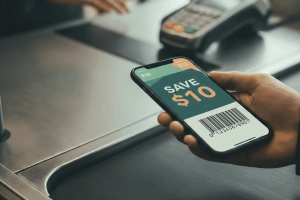
Published by Trisha Asgeirsson – President, SKUx    The Need for Now  Scenario A: You’re told you’ll earn points that will accumulate over time, eventually allowing you to redeem rewards in a few months. Scenario B: Your phone immediately buzzes with a $10 digital reward card you can use on your next purchase.  Which feels better? Which motivates you to return sooner?  If you chose Scenario B, you’re not alone. Humans are neurologically wired for instant gratification – and nowhere is this more evident than in modern loyalty and reward programs.   This isn’t just a preference, it’s become a baseline expectation that’s reshaping how successful brands build customer loyalty.  The Great Expectation Shift  Loyalty programs have existed for decades, but consumer expectations have evolved dramatically. Millennials grew up with points-based programs, patiently collecting airline miles and grocery rewards. They learned to wait, to accumulate, to delay gratification for bigger payoffs.  Gen Z, however, represents the first fully digital-native generation – and patience simply isn’t in their DNA when it comes to rewards. They expect real-time recognition and perks as standard operating procedure. Behavioral science teaches us that immediate rewards create stronger psychological impact. The dopamine hit from an instant win…